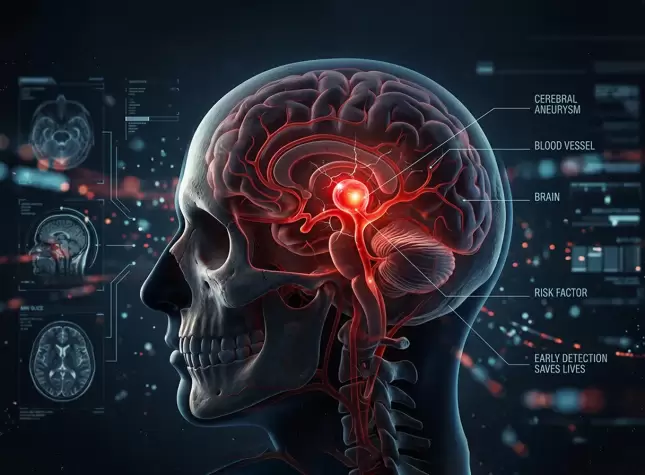
A brain aneurysm (AN-yoo-riz-um), also known as a cerebral aneurysm or intracranial aneurysm, is a bulge or ballooning in a blood vessel in the brain.
Brain aneurysms are common, and most of them aren't serious, especially if they're small. Most brain aneurysms don't rupture. They usually don't cause symptoms or health concerns. In many individuals, a bulge or ballooning in a blood vessel in the brain is found during tests for other conditions.
However, if an aneurysm ruptures, it can quickly become life-threatening and requires emergency treatment. Hence, they are often known as a silent threat inside the brain. Let's explore in detail.
Read Also: How Long Does It Take To Recover From Brain Surgery? Recovery Timeline & Tips
What Is a Brain Aneurysm (Intracranial Aneurysm)?
A brain aneurysm is a bulge in a weak area of an artery in or around the brain. The constant pressure of blood flow pushes the weakened section outward, resulting in a blister-like bump.
Think of it like a worn-out patch on a garden hose. When water flows normally, the hose works fine, but at the weak spot, the pressure makes it bulge outward. The more water that flows through, the more that the weak section stretches and thins. Over time, just like that fragile part of the hose could burst, the aneurysm can also rupture if the pressure becomes too much.
Alternative Names of Brain Aneurysm
It is also known as:
- Cerebral aneurysm
- Intracranial aneurysm
Why an Intracranial Aneurysm Can Be a Silent Threat
Because a ruptured brain aneurysm can cause serious health problems, such as:
- Subarachnoid hemorrhage (SAH): Bleeding in the space between the brain and the thin tissues that cover and safeguard it (the arachnoid layer).
- Hemorrhagic stroke: Bleeding in the space between the skull and the brain.
This can result in permanent brain damage or other complications:
- Vasospasm: Blood vessels get narrower or clamp down, reducing oxygen to the brain
- Hydrocephalus: Fluid buildup raises brain pressure
- Seizures: A temporary, uncontrolled surge of electrical activity in the brain.
- Coma: A prolonged unconscious state, which can last days to weeks.
- Death: About 50% of ruptured cases are fatal
A ruptured brain aneurysm can be life-threatening and requires emergency medical treatment.
Read Also: Your Guide to the Best Neurosurgeons in Kolkata for Brain & Spine Surgery
What Is the Cause of Brain Aneurysm?
Cerebral aneurysms are caused by the thinning or weakening of artery walls in the brain. They usually form at branching points of arteries. Sometimes, you can be born with a brain aneurysm due to an abnormality (birth defect) in an artery wall.
Several other factors can contribute to the weakening of an artery. Some of these risk factors develop over time, while others are present at birth.
- Smoking.
- High blood pressure.
- Substance use, particularly cocaine.
- Excessive alcohol use.
- Inherited connective tissue conditions.
- A narrow aorta, also called coarctation of the aorta.
- Brain arteriovenous malformation, also called brain AVM.
- A family history.
The following inherited factors affect the health of your arteries and can increase the risk.
- Vascular Ehlers-Danlos syndrome.
- Autosomal dominant polycystic kidney disease.
- Marfan syndrome.
- Fibromuscular dysplasia.
- Arteriovenous malformation.
Read Also: Neurosurgery Costs in Kolkata: Factors That Affect Pricing
Symptoms of Brain Aneurysm
Most unruptured brain aneurysms do not cause any symptoms or health problems. In many people, they are found during tests for other conditions.
However, here are the common symptoms:
Symptoms of an Unruptured Brain Aneurysm
If they become large enough, the bulge in the artery can exert pressure on nearby nerves or brain tissue, causing the following symptoms:
- Headaches.
- Changes in vision.
- Enlarged (dilated) pupil.
- Numbness or tingling in the head or face.
- Pain above and behind the eye.
- Seizures.
Symptoms of a Ruptured Brain Aneurysm
- Thunderclap headache (some describe it as “The worst headache of my life”).
- Nausea and vomiting.
- Stiff neck.
- Blurred.
- Double vision.
- Sensitivity to light.
- Seizures.
- Drooping eyelid.
- Dilated pupil.
- Pain above and behind your eye.
- Confusion.
- Weakness and/or numbness.
- Loss of consciousness.
Read Also: Top Neurosurgeons In Kolkata: Expertise You Can Trust
How Are Cerebral Aneurysms Diagnosed?
Doctors at IRIS Multispecialty Hospital use several imaging techniques to detect aneurysms:
- CT (computed tomography) scan
- MRI (magnetic resonance imaging) scan
- Cerebral angiography
- Cerebrospinal fluid (CSF) analysis
Read Also: Traumatic Brain Injury (TBI): Signs, Treatment, and Life After Injury
Conclusion
If you ask, “can brain aneurysms be prevented?" The answer is you can’t prevent or change certain brain aneurysm risk factors, such as your age or genetic conditions.
But you can lower your risk of developing a brain aneurysm by:
- Maintaining healthy blood pressure with prescribed medications and/or lifestyle modifications.
- Avoiding smoking or quitting smoking.
- Getting help for alcohol use disorder and/or substance use disorder.
- Staying away from cocaine or other stimulants.
If you notice any symptoms such as headaches, vision changes, enlarged (dilated) pupils, or numbness or tingling on your head or face, consult your Neurologist in Kolkata for the right diagnosis.
If diagnosed, your treatment depends on the size, location, and risk of rupture of the aneurysm. The intracranial aneurysm treatment options range from microsurgical clipping and endovascular coiling to flow‑diverting stents. Just follow your doctor’s advice.
Looking for the best brain aneurysm treatment in Kolkata, India? Schedule a call at +91 8929579509.
Our Address: 82/1, Raja S. C. Mullick Road, Kolkata 700047 Open: 24x7, with 4.5 star review from 7,295 google reviews
FAQs
Q1: What is the brain aneurysm recovery time?
A: The recovery time may vary based on factors like:
- Ruptured or unruptured brain aneurysm
- Methods used for the treatment
- Complications involved
It generally takes 6–8 weeks for unruptured cases treated with surgery, while ruptured aneurysms often require months to years for full rehabilitation.
Q2: Can an MRI or CT scan detect an aneurysm?
A: Yes, both MRI and CT/CTA scans can be used to identify a brain aneurysm.

 IRIS
IRIS

 Address: 82/1, Raja S. C. Mullick Road, Kolkata 700047
 Open: 24x7
 +91 8929579509


